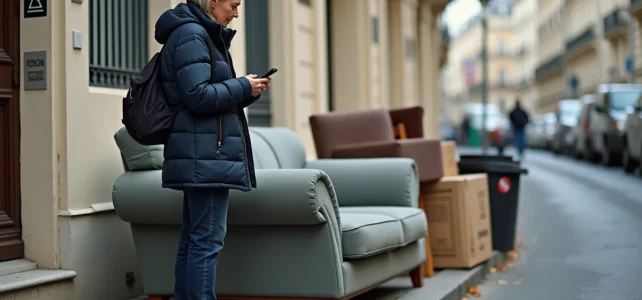
A worn-out sofa blocking the hallway for three weeks, a broken washing machine stored in the entrance: in the 15th arrondissement, getting rid of bulky items requires knowing the right procedure and especially the right time slot. The free collection organized by the City of Paris remains the most direct solution, but with appointment delays, rejected items, and unknown alternatives, one can quickly lose time.
Bulky item collections and reuse in the 15th: a game-changing circuit
The 15th arrondissement is one of the pilot areas where the City has been testing, since 2023, collections combining bulky item pickup and reuse. Specifically, social and solidarity economy associations come before or at the same time as collection teams to retrieve furniture and small equipment that are still in good condition.
The goal is to <strong divert reusable items to recycling centers rather than sending them to the dump. This initiative is part of the Paris Circular Economy Plan 2024-2027, adopted in July 2024 by the Paris Council.
In practice, this means that a piece of furniture left on the sidewalk for a scheduled pickup can be intercepted by a partner solidarity organization. It is advisable to indicate the good condition of the item when making the online appointment.
Returns vary regarding the regularity of these mixed collections from week to week, but the principle is active in the 15th. To check the bulky item collection times in Paris 15 and anticipate actual delays, it is best to plan at least a week in advance of the desired date.
Appointment booking on the Paris tele-service: common issues
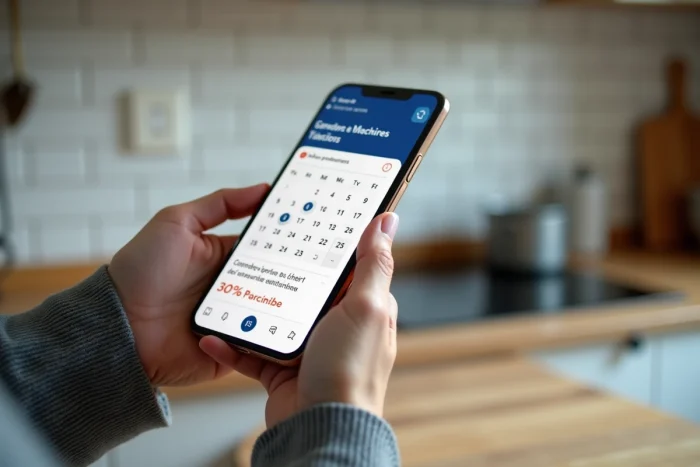
The pickup request goes through the online tele-service of the City of Paris (teleservices.paris.fr). You enter the address, type of items, and estimated volume. The platform then proposes a collection time slot.
Maximum volume and rejected items
The deposit is limited to 3 m³ per request. This is roughly the volume of a large van. Beyond that, you need to split it up or go to a recycling center.
The list of rejected items regularly traps residents of the 15th:
- Debris, paint cans, and chemical products are never taken care of by the City’s bulky item service.
- Green waste (branches, soil, grass) falls under a separate circuit and must be taken to a recycling center.
- Large appliances (refrigerators, washing machines, ovens) are not collected by the cleaning teams: they go through the partner Ecosystem via the site jedonnemonelectromenager.fr, with free home pickup.
Large appliances follow a completely separate circuit from that of furniture or bedding. This is the most common confusion, and it leads to collection refusals on the day.
Observed delays and drop-off time slots
The appointment obtained online specifies a date and time slot. You must place the items on the sidewalk, in front of the building, the evening before or on the morning of the indicated time. Dropping off too early exposes you to a fine for illegal dumping, which can increase significantly.
Delays between the request and actual collection vary depending on the period. After the end-of-year holidays or in September, the slots fill up much faster than at other times of the year.
Recycling center in the 15th arrondissement: access and practical constraints
For items rejected during sidewalk collection, or when the volume exceeds the limit, the recycling center remains the solution. The 15th has a drop-off point accessible to Paris residents upon presentation of proof of residence.
You can drop off classic bulky items, but also waste from electrical equipment, wood, and large quantities of cardboard. Bringing items yourself to the recycling center avoids the waiting time for an appointment, making it the fastest option when you have a vehicle.
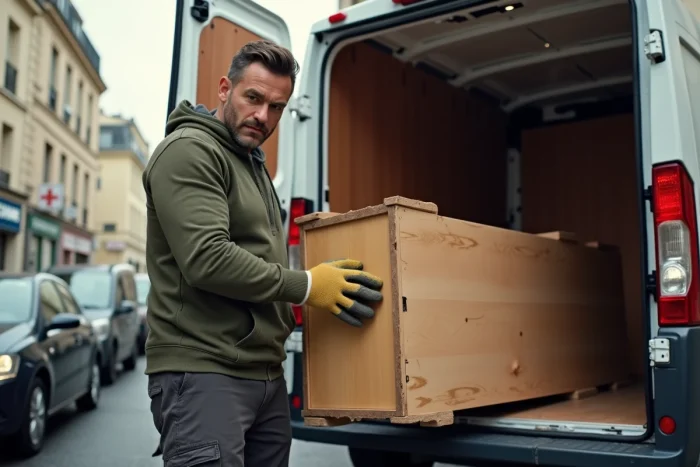
The challenge, in such a dense arrondissement as the 15th, remains transportation. Without a car or van, carrying a sofa down three flights of stairs and loading it is a logistical feat. This is where private clearance services or connection platforms come in, at a variable cost.
Trimobile and eco-mobile point: everyday small bulky items
The Trimobile (or eco-mobile point) is a mobile service from the City of Paris that stops at fixed locations, according to a schedule published by the 15th town hall. It accepts small bulky items that regular collection does not cover and that seem disproportionate for the recycling center to handle.
We are talking about small appliances, dishes, broken toys, lighting fixtures, or textiles. The Trimobile complements the appointment-based collection for items that are too small to justify a request but too large for the yellow or green bin.
- The service is free and does not require an appointment, but you must respect the hours and parking location displayed on the 15th town hall’s website.
- The quantities accepted are limited per visit: you cannot empty an entire apartment at the Trimobile.
- Hazardous waste (batteries, light bulbs, chemical products) is also collected there in dedicated bins.
New drop-off constraints on the sidewalk in the 15th
Since 2023, accessibility guidelines for sidewalk drop-offs have been tightened in accident-prone areas of the 15th, particularly around rue de Vaugirard and rue Lecourbe. Cleaning services can refuse collection or issue fines if the drop-off obstructs pedestrian traffic or blocks a PMR passage.
A poorly positioned drop-off on the sidewalk can be fined even if the appointment has been validated. The exact location must leave sufficient free passage, and the items must not spill onto the roadway or block an entrance to a building.
This tightening is part of a broader context: the generalization of separate collection of organic waste in Paris, initiated in 2024, has led to an influx of small furniture and old bins around the new collection points. The City is adapting its routes to limit illegal dumping related to this phenomenon, a topic discussed during the Cleanliness and Waste Management Commission of the Paris Council in November 2024.
Checking the exact location and time slot before putting out bulky items remains the most effective gesture to avoid a refusal or a fine. The 15th, with its density and often narrow sidewalks, leaves little room for error on this point.