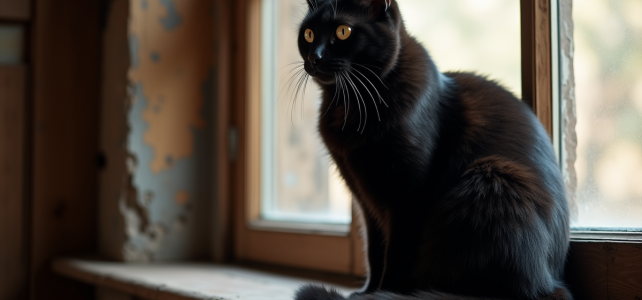
In ancient Egypt, killing a cat resulted in severe penalties, while in medieval Europe, the animal was associated with witchcraft and hunted down. Some cultures greet the sight of a cat passing their door as a favorable omen, while others see it as a promise of misfortune.
Millions of people dream of cats each year, often without grasping their symbolic significance. Between fascination and fear, the feline continues to shape beliefs and attitudes, from medieval superstitions to contemporary dream interpretations.
When cats Become Symbols: Myths, Legends, and Superstitions Around the World
Since the dawn of civilization, the silhouette of the cat has fascinated, troubled, and bewildered. Neither fully domestic nor entirely wild, it occupies a unique place: sometimes a totem, sometimes a cursed beast. In Egypt, the goddess Bastet embodies sweetness, fertility, but also vigilance. Her representation, still visible in museums, recalls a time when harming a domestic cat could provoke collective outrage.
During the European Middle Ages, the meaning reverses. Black cats become the supposed accomplices of witches, associated with fear and occult powers. They are then hunted, relentlessly persecuted. The tales collected by Paul Sébillot or Jean Chevalier Alain Gheerbrant testify to an imagination nourished by the fear of the invisible and the fascination for the art of the feline slipping into darkness, sometimes allowing its shining eyes to pierce the dark.
In Asia, the codes change: the white cat embodies happiness and purity, while the alley cat, a companion of everyday life, evokes the ability to adapt, to survive against all odds. Today’s popular culture appropriates these figures. From the cat endowed with baraka to the guardian animal cat, stories multiply, never exhausting the enigma. Take the black cat with green eyes: it concentrates all the power of mystery, blending a piercing gaze with inky fur. Interpretations abound, and the article ‘The Mysteries of the Beauty of the Black Cat with Green Eyes – Les Animaux de la Fée’ offers a unique perspective.
Whether in Paris or Tokyo, the cat roams, free, stealthy, escaping any definitive label. It appears in all eras, carrying symbols and superstitions that question the place of man in relation to the animal, to the night, to the untameable.
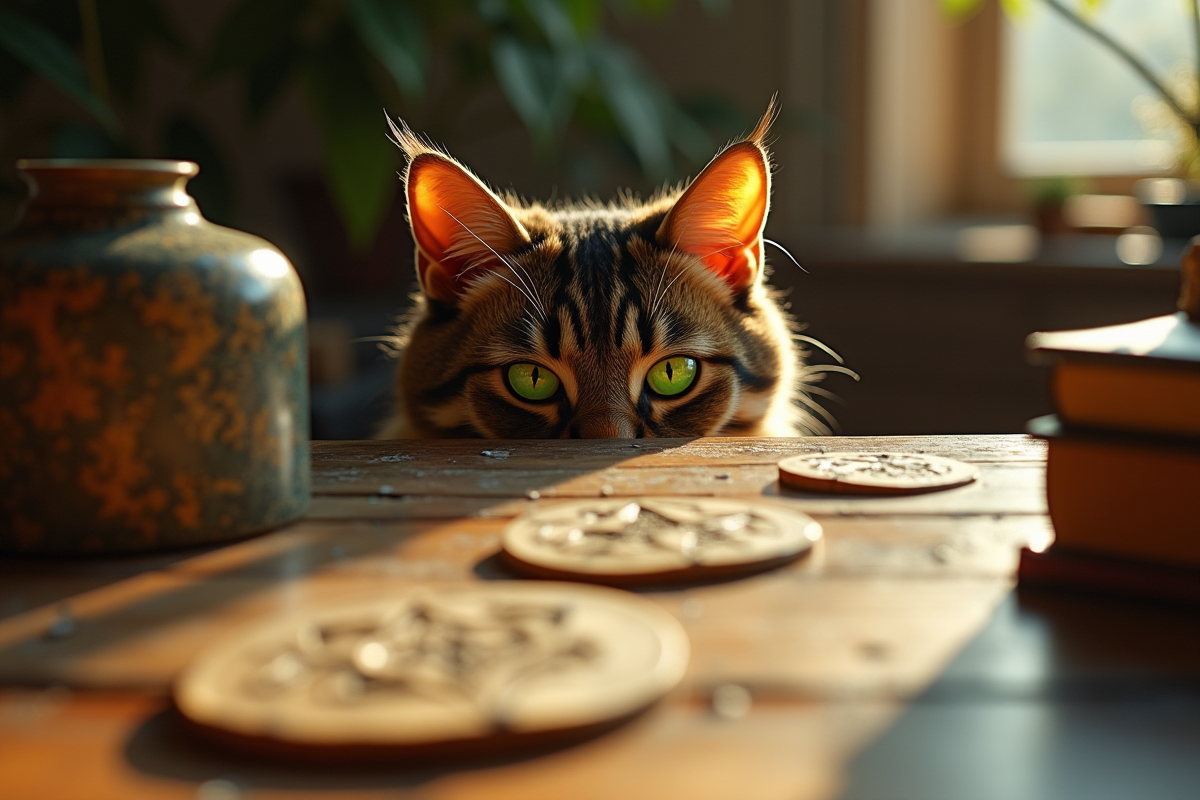
What Does a Dream of a Cat Reveal? Decoding the Hidden Messages Behind the Feline Appearance
In the theater of sleep, the cat appears, bearer of secrets and mystery. Dreams of cats intrigue: they often feature this enigmatic silhouette, neither fully protective nor entirely threatening. According to traditions, encountering a black cat in a dream would herald the arrival of the unexpected or the revelation of an occult power, while a white cat evokes purity, innocence, and sometimes a rare lucidity.
A dream of a cat acts as a revealer. It highlights the desire for freedom, the call for independence, or the necessity to let time take its course. The feline, with its art of observation, inspires patience, waiting for the ideal moment. It also reflects the will to challenge the rules, to step aside, to explore the gray areas away from expected paths.
Here are some frequently reported situations in dreams involving cats:
- A playful cat: often a sign of awakening sociability or an asserting femininity
- A aggressive cat: sometimes an indication of inner tensions, a tug-of-war between instinct and reason
- A calm cat: an image of inner peace, a need for protection, or a desire for fertility
The cat’s ability to transform in dreams invites reflection on identity, on relationships with others, on the possibility of changing one’s skin. Beneath its apparent grace, the feline nudges us, even silently, to listen to what is unfolding within us, to follow an intuition that can sometimes be more reliable than logic.
Perhaps this is the greatest power of the cat: to shake our certainties, to disturb our gaze, and to remind us that between light and shadow, the mystery remains whole.