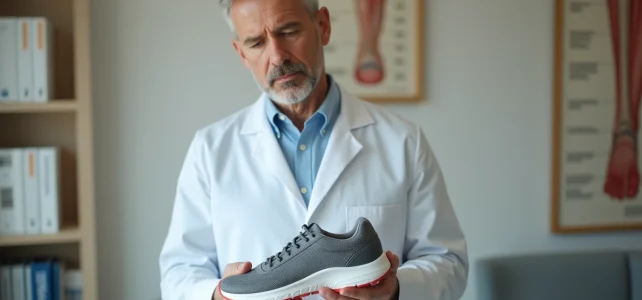
Doctors and podiatrists do not validate Skechers as an overall good or bad brand for health. They assess ranges, constructions, and uses. This distinction radically changes the interpretation of the Californian brand and explains why medical opinions seem contradictory from one patient to another.
Skechers cushioning and foot stability: what podiatrists really measure
The memory foam used in the majority of Skechers’ mainstream models absorbs vertical shocks adequately during daily walking. We observe that the cushioning does not compensate for a lack of lateral stability, and this is precisely where the problem lies for some wearers.
A pronated or supinated foot needs a rigid heel counter and a structured midsole. Many soft-soled Skechers models offer neither. The immediate feeling of comfort masks a lack of support that, over several months, can exacerbate heel or knee joint pain.
Healthcare professionals who provide an opinion on the quality of Skechers shoes systematically distinguish ranges with reinforcement (Arch Fit, for example) from purely lifestyle ranges. A Skechers Arch Fit incorporates a molded arch support, whereas a classic memory foam model only provides superficial comfort without podiatric architecture.
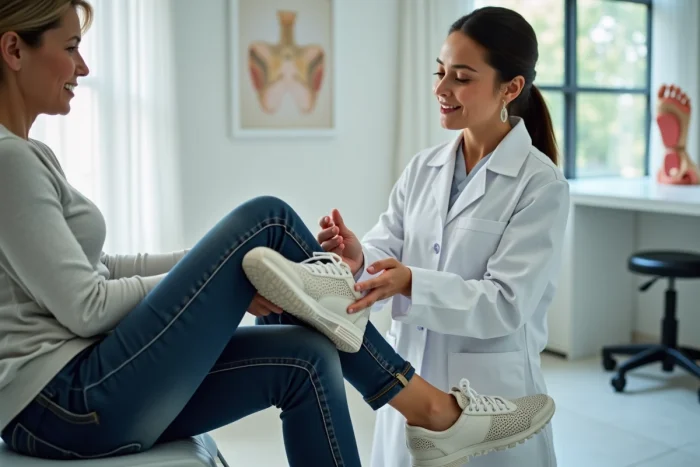
Skechers and plantar fasciitis: temporary comfort or lasting solution
A comfortable shoe is not a therapeutic shoe. This phrase summarizes the position of most podiatrists regarding patients who come in for plantar fasciitis while wearing memory foam Skechers.
The foam adapts to the shape of the foot, providing a pleasant feeling of welcome. However, it compresses under body weight over the weeks and loses its supportive capacity. A patient suffering from heel pain needs a sole that resists sagging, not a foam that passively conforms to deformation.
The problem is not unique to Skechers. Any shoe whose cushioning relies solely on memory foam has this limitation. We recommend, in the case of diagnosed plantar fasciitis, to check three parameters before choosing a model:
- The rigidity of the heel counter, which must withstand manual lateral pressure without deforming
- The presence of an integrated arch support, distinct from the removable insole
- The torsion test of the sole: a suitable shoe should not be able to twist easily between two hands
Some Skechers models pass these three tests. Most entry-level models do not.
Skechers shoes for sports: the limits that doctors point out
Skechers markets ranges labeled running and training. Comfort marketing does not guarantee a design suitable for athletic effort. Sports doctors and physiotherapists raise a specific point: the drop (the height difference between the heel and the forefoot) and the density of the midsole are not always calibrated for repeated running.
A regular runner opting for an urban walking Skechers exposes themselves to cushioning that is too soft under dynamic load. The foot sinks into the foam instead of rebounding, which increases muscle fatigue in the calf and Achilles tendon.
The ranges specifically designed for running (like certain variations of the GO RUN line) incorporate denser foams and a defined drop. They are constructed very differently from the lifestyle models that also bear the Skechers logo. Judging the brand without distinguishing the range is akin to comparing a sedan and a utility vehicle simply because they bear the same badge.
Width of the forefoot and toes: an overlooked strength of some Skechers
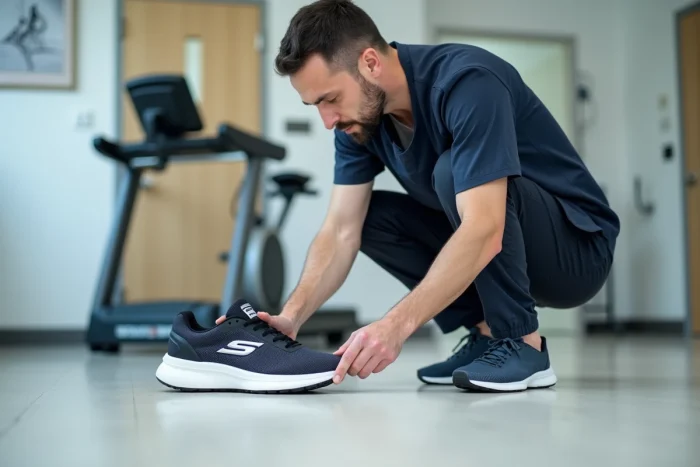
Podiatrists working with patients who have bunions or claw toes note a real advantage of several Skechers models: the width of the toe box. Many competitor brand shoes compress the forefoot for aesthetic reasons, which exacerbates pain and deformities.
On this criterion, Skechers Slip-Ins and several models from the Relaxed Fit range offer enough space for the toes not to be compressed. This feature, often overlooked in consumer comparisons, is crucial for the daily comfort of individuals dealing with forefoot issues.
The breathability of the mesh used in these ranges also helps limit maceration, an aggravating factor for fungal infections and skin irritations. These qualities explain why some healthcare professionals occasionally recommend Skechers to elderly or diabetic patients, while clarifying that the shoe does not replace a complete podiatric evaluation or the use of custom orthotics.
Skechers and orthotic insoles: real compatibility
A final point that doctors regularly address concerns the use of orthotic insoles in Skechers. The removable insole present in most models theoretically allows for the insertion of a custom orthotic insole.
In practice, the interior volume of the shoe conditions the outcome. Models with a low upper and thick foam sole leave little room for a rigid orthotic without compressing the top of the foot. We recommend testing the orthotic in-store before purchase, ensuring that the heel does not rise above the counter.
Skechers shoes remain a relevant choice for daily walking without declared pathology. For any diagnosed foot problem (plantar fasciitis, metatarsalgia, ankle instability), the choice of the specific model matters more than the choice of the brand, and the support of a podiatrist remains the only guarantee of appropriate footwear.